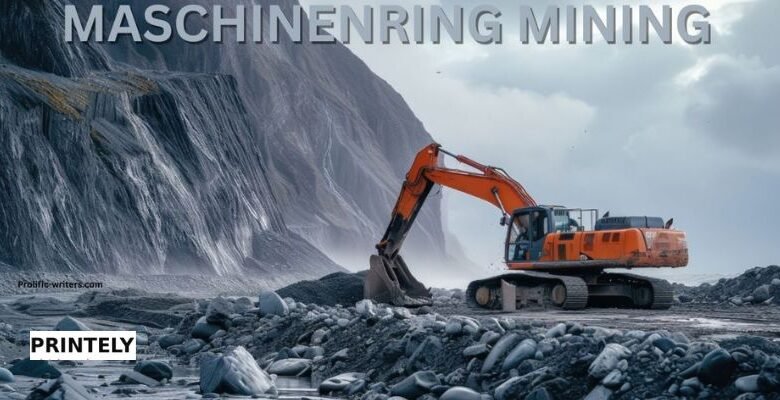
When I first learned about maschinenring mining, I was immediately struck by how it combines the principles of cooperative resource-sharing with the highly equipment-intensive world of mining. Unlike traditional operations where each company invests in its own fleet of machines and staff, Maschinenring Mining offers a smarter, collaborative approach that makes projects more efficient and cost-effective. As someone familiar with the challenges of managing mining resources, I knew this could be a game-changer.
What fascinated me most was how Maschinenring Mining leverages shared machinery, organized labor, and technical support to maximize operational efficiency. Companies no longer need to maintain idle equipment or struggle with costly maintenance. Instead, smart scheduling and cooperative planning ensure that resources are used optimally across multiple projects, reducing downtime and increasing productivity.
Following examples of Maschinenring Mining in action, I realized its potential for transforming not just small- and medium-sized operators, but the mining industry as a whole. By fostering collaboration and resource-sharing, this model creates flexibility, reduces costs, and encourages innovative solutions to traditional mining challenges. Experiencing the concept firsthand made me appreciate how cooperation can redefine efficiency in heavy industries.
What is Maschinenring Mining? Definition and Concept
Maschinenring Mining is an innovative concept that applies the cooperative Maschinenring model to the mining sector. At its core, it focuses on shared resources, organized labor, and coordinated technical support to streamline operations. Companies no longer need to individually purchase and maintain expensive equipment, which drastically reduces operational overhead.
The system allows multiple mining operators, contractors, and service providers to pool machinery, staff, and expertise. By leveraging smart scheduling, machinery can move between projects seamlessly, ensuring equipment is utilized optimally and downtime is minimized. This flexibility is particularly beneficial for small- and medium-sized mining companies with limited budgets.
Conceptually, Maschinenring Mining emphasizes collaboration over competition. It transforms mining operations from isolated, costly ventures into interconnected, efficient systems where resource-sharing fosters adaptability, resilience, and sustainability. This model is increasingly being recognized as a game-changer for equipment-intensive industries.
Challenges in Traditional Mining Operations
Mining is one of the most equipment-intensive industries in the world. Excavators, loaders, drilling machines, and transport vehicles demand enormous upfront investment and ongoing maintenance. For smaller operators, acquiring and maintaining such machinery can be financially daunting, often restricting growth and operational flexibility.
Additionally, inefficient scheduling and underutilization of equipment are common in conventional mining setups. Machines may remain idle for days, while other sites experience shortages, creating bottlenecks and increasing costs. Staffing and maintenance teams also require careful coordination, further complicating logistics.
Environmental and safety regulations add another layer of complexity. Companies must ensure that machinery is compliant, well-maintained, and operated safely, further stretching resources. Maschinenring Mining addresses these challenges by providing structured cooperation, ensuring assets are fully utilized, and operational efficiency is maximized.
Benefits and Efficiency Improvements
One of the primary benefits of Maschinenring Mining is cost reduction. By sharing expensive machinery and labor, companies save on capital expenditure and reduce maintenance overhead. Smart scheduling ensures equipment is used effectively across multiple sites, minimizing idle time.
Operational efficiency improves as maintenance teams, skilled operators, and technical support are pooled. This approach reduces redundancy and ensures that machinery and personnel are deployed where they are needed most. Projects can progress faster, budgets can be optimized, and unexpected downtime is significantly minimized.
Flexibility and adaptability are additional advantages. Mining operations often face changing project requirements or site conditions. Maschinenring Mining allows companies to quickly reallocate resources, respond to demand fluctuations, and maintain consistent output without incurring significant additional costs.
Equipment Sharing and Technical Coordination
A central element of Maschinenring Mining is shared equipment. Excavators, drilling rigs, loaders, and trucks are coordinated among multiple operators to maximize utilization. Smart scheduling systems track availability, maintenance schedules, and project demands to ensure each machine is deployed efficiently.
Technical coordination extends beyond machinery. Skilled operators, maintenance crews, and support staff can be shared across projects, ensuring that every site has the expertise it needs. This reduces bottlenecks and improves operational continuity.
For example, a small mining operator may not have the budget for its own fleet of trucks. By participating in a Maschinenring Mining cooperative, it can access the machinery it needs while sharing maintenance resources with other companies, creating a win-win scenario.
Cooperative Models for Small- and Medium-Sized Operators
Small- and medium-sized mining companies often struggle with high capital costs and limited operational flexibility. Maschinenring Mining provides a solution by creating a cooperative framework where resources are pooled and shared efficiently.
Membership in the cooperative allows smaller operators to compete on an even footing with larger companies. By accessing shared machinery, labor, and technical support, they can take on larger projects without the prohibitive costs of individual ownership.
This collaborative model fosters knowledge-sharing, risk mitigation, and innovation. Companies benefit not only from reduced costs but also from improved project planning, better equipment utilization, and stronger industry connections.
Case Examples and Real-World Applications
Several mining operations have successfully implemented Maschinenring Mining principles. For example, a mid-sized quarry in Europe integrated shared loaders and excavators with neighboring contractors. By coordinating machinery and operators, project completion time was reduced by 20%, and equipment downtime was minimized.
Another case involved a small mining cooperative that pooled drilling rigs across multiple sites. The cooperative achieved cost savings of nearly 30% annually, demonstrating that shared resource models can be highly effective in practical settings.
These examples highlight that Maschinenring Mining is not just theoretical. It can deliver measurable efficiency gains, cost reductions, and operational improvements when applied thoughtfully.
Future Potential and Trends
Maschinenring Mining is poised for broader adoption as mining companies face increasing cost pressures and the need for operational efficiency. Digital tracking, AI-powered scheduling, and remote monitoring are likely to enhance the effectiveness of cooperative models.
Emerging trends suggest that environmental sustainability will also drive adoption. By sharing equipment and reducing redundant machinery, companies can lower energy consumption and carbon footprint. Furthermore, integration with predictive maintenance systems can improve machine longevity and reduce unexpected failures.
The model’s flexibility ensures it can adapt to different scales, from small quarries to large mining enterprises. As industries embrace collaboration and smart technology, Maschinenring Mining is set to redefine resource management in mining.
Tips for Implementing Maschinenring Mining
For companies looking to adopt Maschinenring Mining, start with clear agreements on resource-sharing policies, maintenance responsibilities, and scheduling protocols. Transparency and communication are key to cooperative success.
Invest in digital tools to track equipment usage, maintenance schedules, and labor allocation. This ensures resources are optimized, downtime is minimized, and costs are predictable.
Finally, involve all stakeholders, from operators to project managers, in planning and monitoring. When everyone understands the cooperative framework and benefits, collaboration becomes seamless, efficiency improves, and long-term success is more likely.
Also Read About: Boelis: Uses, Benefits & Future Potential
FAQs About Maschinenring Mining
1. What is Maschinenring Mining?
Maschinenring Mining is a cooperative resource-sharing model that allows multiple mining operators to share machinery, labor, and technical support for increased efficiency and reduced costs.
2. How does it improve operational efficiency?
By pooling equipment and personnel, scheduling smartly, and sharing resources, companies can minimize idle time, reduce downtime, and complete projects faster.
3. Can small mining companies benefit from this model?
Yes, SMEs gain access to expensive machinery, skilled operators, and technical support without incurring prohibitive individual costs.
4. What types of equipment are typically shared?
Excavators, loaders, drilling rigs, trucks, and maintenance teams are commonly coordinated through the cooperative model.
5. What is the future potential of Maschinenring Mining?
With AI scheduling, digital tracking, and sustainability trends, cooperative mining models are expected to expand, optimizing resources and lowering costs across the industry.
For More Articles Click here: Printely.co.uk

